
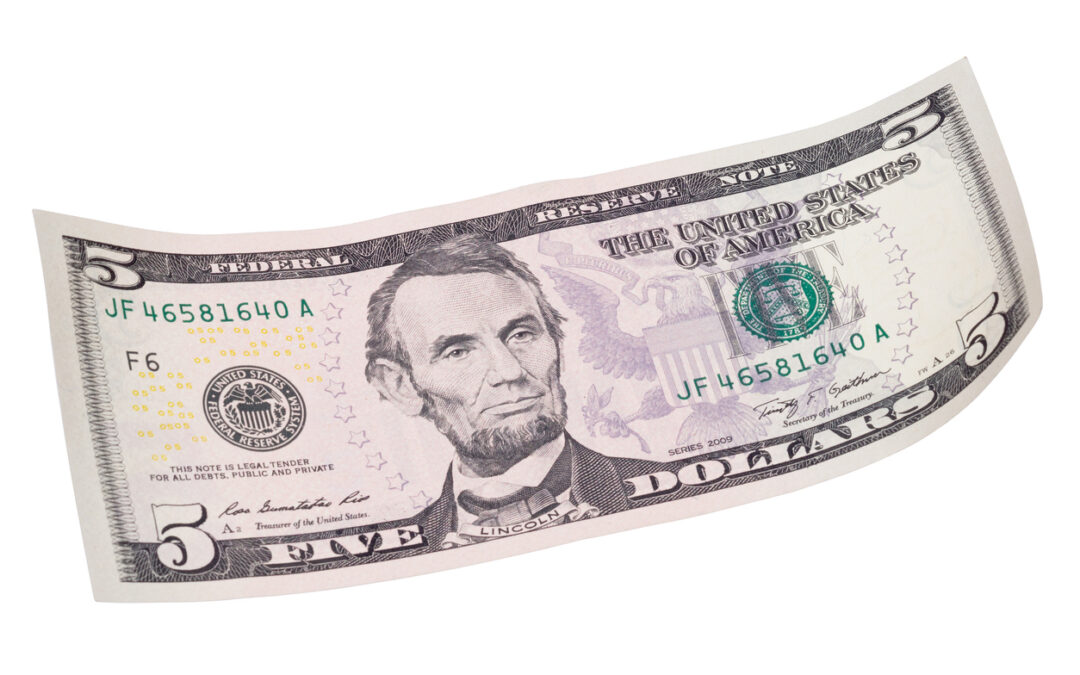
Five dollars.
For many of us, $5 disappears without much thought.
It might be an energy drink on the way to work. A coffee. Part of a fast-food order. An app subscription you forgot you had. A couple of convenience-store snacks.
Spend $5 today and you probably won’t remember where it went a month from now.
But what if you did something different with that $5?
What if, instead of spending it, you set aside $5 every day with the goal of buying physical silver?

At USA Pawn in Pearl, Jackson, Canton, and Vicksburg, Mississippi, we see gold and silver come through our doors regularly, and one of the interesting things about precious metals is that you don’t necessarily have to be wealthy to start learning about them.
For younger adults who are just beginning to save, invest, and think about their financial futures, silver can provide an interesting lesson in consistency.
So let’s do the math.
What could happen if you started with just $5 a day?

First, $5 a Day Is More Than You Think
Five dollars doesn’t sound like an investment strategy.
But multiply it by 365 days.
$5 × 365 = $1,825 per year.
Keep going:
After two years, you have contributed $3,650.
After five years, you have contributed $9,125.
After 10 years, you have contributed $18,250.
After 20 years, you have contributed $36,500.
That’s before considering whether the silver you purchased increased or decreased in value.
This is one of the most important financial lessons for young adults: small amounts can become meaningful amounts when you’re consistent.
You don’t have to wake up one morning with $10,000 available to start building assets.
You can start with $5.

Why Silver?
Gold gets a lot of attention.
When precious metals make the news, gold usually gets the headline. But for someone in their 20s or 30s who wants to begin owning physical precious metals, the price of gold can make getting started feel intimidating.
Silver can offer a more approachable entry point.
Depending on the type of silver being purchased and current market prices, younger buyers may be able to gradually accumulate silver without making one enormous purchase.
That could include silver coins, rounds, bars, or certain other forms of physical silver.
Instead of thinking, “I can’t afford precious metals,” think about a different question:
What can I afford to set aside consistently?
Maybe that’s $5 a day.
Maybe it’s $25 every Friday.
Maybe you skip a few takeout meals each month and put the difference into your silver fund.
The point isn’t the exact amount.
It’s developing the habit.
What Would $5-a-Day Silver Investing Actually Look Like?
You probably aren’t going to walk into USA Pawn every afternoon with a $5 bill and ask for $5 worth of a silver bar.
Think of the $5 as a savings strategy instead.
Set aside $5 each day.
At the end of a 30-day month, you would have roughly $150.
At the end of three months, you would have about $450.
At six months, that’s approximately $900.
At the end of a year, you’ve set aside $1,825.
You can then use your accumulated money to purchase physical silver when it makes sense for you.
How much silver that buys will depend on the market price at the time, the type of silver you purchase, and the premium or markup over the metal’s spot price.
That’s important.
If silver is trading at one price per ounce, that does not necessarily mean you can purchase a physical one-ounce silver coin, round, or bar for exactly that amount. Physical precious metals generally sell above spot price, and different products can carry different premiums.
You should understand what you’re buying and what you’re paying before making a purchase.
Here’s Where Starting Young Gets Interesting
Imagine two people.
One begins thinking about investing at 25.
The other waits until 45.
The 45-year-old may earn more money and be able to make larger purchases.
But the 25-year-old has something extremely valuable:
Time.
Starting young gives you years to develop good financial habits.
It also means you have time to learn.
You’ll learn how precious-metal prices move. You’ll learn about spot prices and premiums. You’ll learn the difference between collectible coins and silver purchased primarily for its metal content. You’ll learn how to store physical silver properly.
Most importantly, you begin thinking differently about money.
Instead of asking:
“What can I buy with this $5?”
you start asking:
“What can this $5 become?”
That mindset can extend far beyond silver.
Silver Isn’t a Get-Rich-Quick Investment
This part matters.
Buying silver doesn’t mean you’re guaranteed to make money.
Silver prices move up and down.
Sometimes they can move significantly.
There can be periods when silver performs well and periods when its price falls or remains relatively flat.
Physical silver also has transaction costs. You may pay above the spot price when purchasing silver, while a buyer may offer below spot or at a different market-based price when you eventually sell.
That difference matters when calculating your actual return.
Silver should therefore not be treated like a magic shortcut to wealth.
For younger adults, a better way to look at physical silver is as one potential piece of a larger financial strategy.
You still need savings.
You may want an emergency fund.
You may have a 401(k), IRA, stocks, mutual funds, ETFs, real estate, or other investments.
You may also have debt that needs attention.
Diversification means not putting everything you have into one asset—including silver.
But There Is Something Different About Physical Silver
There is one feature of physical silver that appeals to many people:
You can hold it.
Investing has become increasingly digital.
Your paycheck may arrive electronically. You pay bills online. Your retirement account is numbers on a screen. You can buy a stock from your phone without ever seeing a stock certificate.
Even much of our money is digital.
Physical silver is different.
Buy a silver coin or bar and you have an actual tangible asset.
You can pick it up.
You can store it.
You can build a collection ounce by ounce.
For some younger buyers, that makes saving more interesting.
Watching a number in a savings account increase can be satisfying.
Watching your actual stack of silver grow can make the process feel much more real.
The $5 Challenge
Want to make it fun?
Try the $5 Silver Challenge.
For the next 30 days, set aside $5 every day.
That’s $150.
Don’t worry about buying silver immediately. Just build the habit.
After 30 days, see how you feel.
Was setting aside $5 difficult?
Did you even notice it?
Where did you find the money?
Maybe you made coffee at home instead of buying it. Maybe you skipped one streaming service. Maybe you packed lunch a few more times.
If it worked, keep going.
After 90 days, you’ll have set aside around $450.
After one year, $1,825.
The challenge teaches something that is more valuable than silver itself:
Consistency matters.
What If You Started at 20 and Kept Going?
Let’s imagine a 20-year-old decides to set aside $5 every day.
We’re not going to assume silver increases by a certain percentage because nobody can reliably predict what silver will be worth decades from now.
Instead, let’s only look at the amount contributed.
By age 25: $9,125
By age 30: $18,250
By age 40: $36,500
By age 50: $54,750
By age 60: $73,000
Again, those figures represent contributions, not guaranteed future silver values.
The actual value of the silver accumulated could be higher or lower depending on purchase prices, premiums, the type of silver purchased, selling costs, and future silver prices.
But there’s a bigger point here.
The person who started at 20 has spent decades intentionally putting money toward an asset instead of allowing all of those $5 purchases to simply disappear.
Learn the Difference Between Silver Price and Silver Value
Before buying physical silver, younger investors should learn a few basic terms.
The spot price is the current market price of silver.
A premium is an amount added to the spot price when purchasing a physical silver product. Premiums can vary depending on the product, availability, demand, dealer, and market conditions.
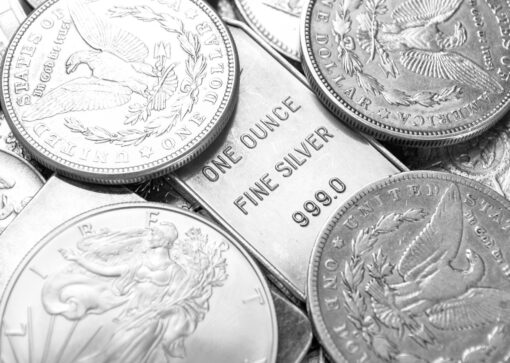
You’ll also hear terms such as bullion, rounds, bars, coins, sterling silver, and junk or constitutional silver.
They aren’t necessarily interchangeable.
A collectible coin, for example, may have value beyond the silver it contains.
A piece of sterling silver isn’t pure silver. Sterling is typically 92.5% silver.
A silver-plated item is another matter entirely and should not be confused with solid silver or sterling silver.
Learning these differences can help you become a smarter buyer.
Why a Pawn Shop Can Be an Interesting Place to Learn About Silver
One advantage of visiting a local pawn shop is that you’re dealing with people who regularly handle gold, silver, jewelry, coins, and other valuable merchandise.
At USA Pawn in Pearl, Jackson, Canton, and Vicksburg, MS, customers can explore opportunities to buy, sell, and pawn valuable items.
If you’re interested in silver, ask questions.
Look at what’s available.
Learn how different pieces are identified.
Ask about purity.
Ask about weight.
Ask how pricing works.
You don’t need to pretend you’re an expert.
In fact, if you’re young and just getting started, one of the smartest things you can do is admit that you’re learning.
Everyone starts somewhere.
What About Selling Silver Later?
This is another reason to understand what you’re buying.
Physical silver has a resale market, but you shouldn’t assume that if you pay $50 for something today, you’ll automatically be able to sell it for $50 tomorrow.
The silver market can change.
Dealer spreads and premiums matter.
The type and condition of the item can matter.
That’s why physical silver generally makes more sense when approached with a longer-term perspective rather than constantly buying and selling based on short-term price movements.
If your silver increases in value over the years, you may eventually decide to sell some of it.
Or you may keep it.
You might even pass it down.
That’s another interesting feature of precious metals. A silver coin purchased when you’re 22 could still be sitting in your safe when you’re 62.
Start With $5. Learn. Build. Repeat.
You don’t need to be rich to start thinking like an investor.
You don’t need thousands of dollars.
And you definitely don’t need to know everything before you begin learning.
You can start with five bucks.
Set it aside.
Do it again tomorrow.
Then do it again.
Learn about silver while your money accumulates. Learn about spot prices, premiums, purity, coins, rounds, and bars. Learn how buying and selling work.
Then decide whether physical silver belongs in your financial strategy.
At USA Pawn in Pearl, Jackson, Canton, and Vicksburg, Mississippi, we’re here for customers who buy, sell, and pawn gold, silver, jewelry, and other items of value. If you’re curious about precious metals, stop in, see what we have available, and start asking questions.
Maybe your first step toward owning silver isn’t buying an ounce today.
Maybe it’s simply deciding that today’s $5 won’t disappear on something you’ll forget about tomorrow.
Because $5 isn’t much.
But $5 a day is $1,825 a year.
And when you’re young, you’ve got one of the most valuable investing advantages of all:
time.