
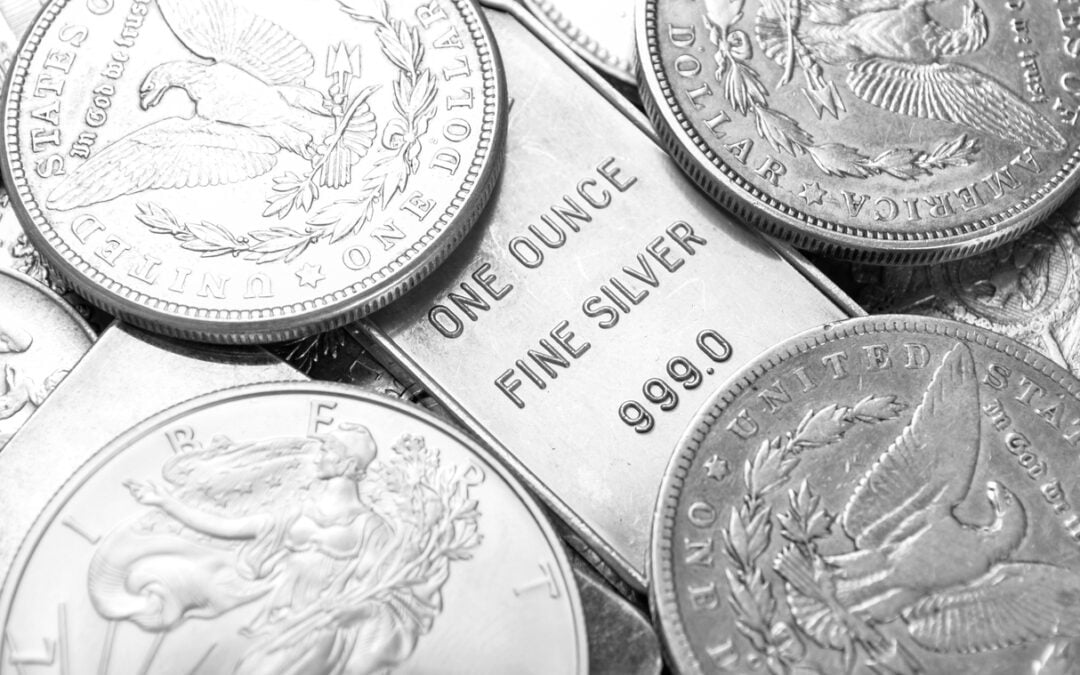
So, you’ve decided you want to start buying silver.
Now comes the next question:
What kind of silver should you buy?
If you’re new to precious metals, it can get confusing quickly. You’ll hear people talking about silver coins, rounds, bars, bullion, spot price, premiums, purity, ounces, and collectible value.
Don’t let all that terminology scare you away.
Buying physical silver doesn’t have to be complicated, especially if you’re starting small.
In our last blog, we looked at what could happen if a younger person started setting aside just $5 a day toward buying silver. Five dollars a day becomes $35 a week, around $150 a month, and $1,825 over the course of a year.
But once you’ve saved some money, what should you actually buy?

At USA Pawn in Vicksburg, Jackson, Pearl, and Canton, Mississippi, we buy, sell, and pawn gold, silver, jewelry, coins, and other items of value. If you’re interested in adding physical silver to your financial strategy, understanding the differences between silver coins, silver rounds, and silver bars is a great place to start.
Let’s break it down.

First, What Is Silver Bullion?
Before comparing coins, rounds, and bars, you need to know one word:
Bullion.
Silver bullion generally refers to silver valued primarily for its precious-metal content rather than its use as jewelry or another product.
Bullion can come in different forms and sizes.
You might find a one-ounce silver coin.
You might find a one-ounce round.
You could find a one-ounce, five-ounce, 10-ounce, or larger silver bar.
They can all contain silver, but they aren’t necessarily the same thing.
And that’s where new buyers need to pay attention.
Silver
What Is a Silver Coin?
A silver coin is issued by a government mint and has a denomination or legal-tender status.
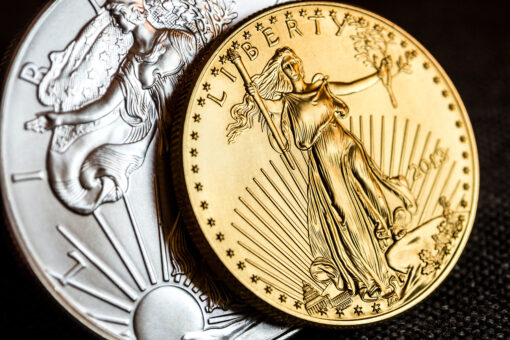
One of the best-known examples in the United States is the American Silver Eagle.
Silver coins are popular with both beginning and experienced buyers because they are recognizable. Government-issued bullion coins may also be easier for many buyers and sellers to identify.
But here’s something important:
The face value of a silver bullion coin is not necessarily its actual market value.
A silver coin may say “$1” on it, for example, while the silver content itself may be worth considerably more.
The value can depend on several factors, including the amount of silver it contains, current silver prices, condition, rarity, demand, and whether the coin has collectible value in addition to its metal value.
That’s why you don’t want to spend valuable silver coins like ordinary pocket change.
Why Would a Beginner Choose Silver Coins?
For someone just starting out, coins can be appealing because they’re familiar.
Most of us have handled coins our entire lives.
A one-ounce silver coin also gives you a convenient unit to understand.
You can physically hold one ounce of silver in your hand and start connecting what you’re hearing about the silver market with an actual asset.
Government-issued bullion coins are also widely recognized.
That recognition can potentially be useful when you eventually want to sell.
However, there can be a tradeoff.
Certain silver coins may carry a higher premium over the spot price of silver than some generic silver rounds or bars.
So while coins can be a great starting point, you should always understand what you’re paying.
What Is a Silver Round?
This is where many first-time buyers get confused.
A silver round looks a lot like a coin.
It’s round.
It may have detailed designs.
It may say “1 Troy Ounce” and “.999 Fine Silver.”
But a round generally isn’t a government-issued legal-tender coin.
Private mints and refiners produce silver rounds primarily for their silver content.
Think of a round as a convenient way of packaging physical silver.
For example, a one-ounce .999 fine silver round contains approximately one troy ounce of fine silver.
Because rounds generally don’t have the same government-mint status as sovereign bullion coins, they may sometimes be available at lower premiums.
That can make them interesting to people whose main goal is simple:
Get more physical silver for the money I’m spending.
Are Silver Rounds Good for Beginners?
They certainly can be.
If you’re following our $5-a-day strategy, imagine you’ve been putting aside money for a few months.
You aren’t necessarily trying to build a rare coin collection.
You simply want to start accumulating physical silver.
In that situation, rounds may be worth considering.
They’re relatively simple to understand, particularly when clearly marked with weight and purity.
But you should still buy carefully.
Look at who produced the round.
Check its stated purity.
Understand its weight.
And compare the purchase price with the current spot price of silver.
The fact that something is shiny, silver-colored, and round does not automatically mean it contains valuable silver.
Education matters.
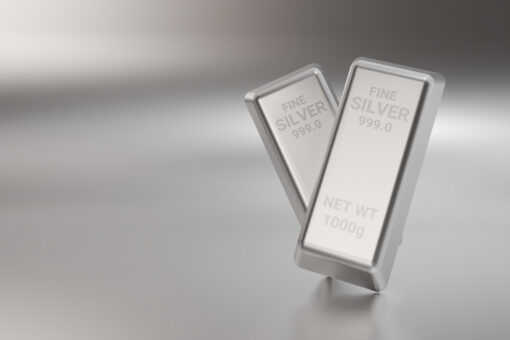
What Is a Silver Bar?
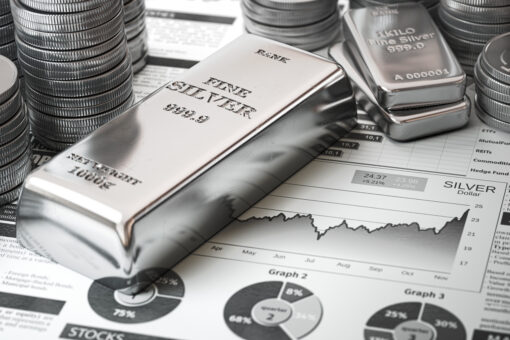
Silver bars are another popular option.
Instead of being round, the silver has been formed into a rectangular bar.
Bars come in many sizes.
You might encounter:
- 1-ounce silver bars
- 5-ounce silver bars
- 10-ounce silver bars
- Larger silver bars
For a new buyer, smaller bars can provide a relatively easy entry into the market.
As your silver collection grows, larger bars may become attractive because they allow you to hold more silver in a compact form.
Silver bars are often marked with information such as their weight, purity, and producer.
For example, you may see markings indicating that a bar contains a certain number of troy ounces and is .999 fine silver.
Why Do Some Silver Buyers Prefer Bars?
One reason is simplicity.
A silver bar isn’t trying to look like money.
It’s silver in a straightforward physical form.
Bars can also be efficient for someone interested primarily in accumulating ounces.
Depending on the product and market, larger bars may sometimes have lower premiums per ounce compared with certain smaller products.
That doesn’t mean a bar is automatically the cheapest choice.
Premiums change.
Demand changes.
Inventory changes.
That’s why you should compare your options at the time you’re ready to buy.
Coins vs. Rounds vs. Bars: What’s the Biggest Difference?
Here’s a simple way to remember it.
Coins are typically government-issued and may carry legal-tender status. Some may also have collectible value.
Rounds are generally produced by private mints and are shaped like coins but are not legal-tender government coins.
Bars are physical silver formed into rectangular pieces and are available in various weights.
None is automatically the “best” choice for everyone.
The right choice depends on why you’re buying silver in the first place.
If You Have $100, What Should You Buy?
This is the type of question a first-time buyer should be asking.
Instead of saying, “What’s the best silver investment?” ask:
“What am I trying to accomplish?”
If you’re interested in owning a recognizable government-issued silver product, you may prefer a coin.
If your priority is accumulating silver while potentially keeping premiums lower, a round might appeal to you.
If you want a straightforward way to stack ounces, bars may make sense.
You can also mix them.
There is no rule saying your silver collection has to consist entirely of one type.
You might own several coins, a handful of rounds, and a few bars.
As you learn more, you’ll discover what you prefer.
What’s a Premium and Why Should You Care?
If you’re going to buy physical silver, this is one of the most important concepts to understand.
You’ll frequently hear about the spot price of silver.
Spot is essentially the current market price for silver.
But you generally aren’t going to walk into a store and buy a physical silver product for exactly the published spot price.
There are costs associated with refining, minting, transporting, distributing, and selling physical silver.
The difference above spot that you pay for a physical product is commonly referred to as the premium.
Here’s a simplified example.
Suppose silver’s spot price were $40 per ounce. That’s only an example, not a statement of today’s silver price.
A one-ounce silver product might cost more than $40 because of the premium.
One product might have a relatively small premium.
Another could have a much larger one.
That’s why first-time buyers shouldn’t only ask:
“How much does this cost?”
Also ask:
“How much silver am I getting, and how much am I paying above the current silver value?”
Don’t Confuse Collecting With Stacking
There are two worlds that sometimes overlap.
One is silver stacking.
The other is coin collecting.
A silver stacker may be primarily interested in accumulating physical silver based on its metal content.
A coin collector may pay significantly more for a particular coin because of rarity, history, condition, mint marks, errors, or other numismatic factors.
A rare silver coin could therefore be worth much more than the silver inside it.
Neither approach is wrong.
But you need to know which one you’re pursuing.
If your goal is to turn that $5-a-day savings strategy into as much physical silver as reasonably possible, paying a huge collectible premium for a rare coin may not fit your goal.
If you love history and coin collecting, however, the collectible aspect may be exactly what interests you.
What Does .999 Fine Silver Mean?
You’ll see numbers stamped on silver products, so learn what they mean.
A marking of .999 fine silver generally means the product is 99.9% silver.
You’ll also encounter sterling silver, which is typically 92.5% silver and may be marked “.925.”
That’s why you can’t compare a sterling silver piece weighing one ounce directly with a one-ounce .999 fine silver bullion round and assume they contain the same amount of pure silver.
Purity matters.
Weight matters.
Learn to look for both.
What Is a Troy Ounce?
Here’s another beginner mistake that’s easy to make.
Precious metals are commonly measured in troy ounces.
A troy ounce is different from the standard ounce used for many everyday products.
One troy ounce is approximately 31.1 grams.
When you’re buying silver bullion, you’ll frequently see the abbreviation “oz t” or wording such as “1 Troy Oz.”
You don’t have to memorize every precious-metals conversion on your first day.
You simply need to understand that precious metals have their own traditional measurement system.
What Should a Young First-Time Buyer Choose?
If you’re new to silver, simplicity may be your friend.
Start small.
Learn what you’re buying.
Don’t spend money you need for rent, groceries, bills, debt payments, or emergencies.
You don’t need to build a giant silver stack overnight.
Remember our original strategy.
$5 a day.
The goal was never to get rich next month.
The goal was to create a habit.
Save.
Learn.
Buy intentionally.
Repeat.
You might begin with a one-ounce round.
Next time, try a government-issued silver coin.
Later, you might purchase a small bar.
Compare them.
See what you enjoy owning.
Watch how their prices relate to silver’s spot price.
Over time, you’ll become a much more knowledgeable buyer.
Don’t Put All Your Money Into Silver
Silver can be interesting, but it should not automatically become your entire financial plan.
Young adults have something incredibly valuable on their side: time.
That gives you opportunities to build savings, contribute to retirement accounts, invest in diversified assets, pay down expensive debt, develop your career, and potentially own precious metals.
Silver can be one piece of that picture.
It doesn’t have to be the whole picture.
And remember that silver prices can fall as well as rise. There are no guaranteed returns.
Ask Questions Before You Buy
One of the best things a new silver buyer can do is ask questions.
At USA Pawn in Vicksburg, Jackson, Pearl, and Canton, Mississippi, we regularly deal with gold, silver, jewelry, coins, and other valuable merchandise.
If you’re looking at a silver item, ask what it is.
Ask about the weight.
Ask about purity.
Ask about the difference between a coin and a round.
Ask how the price relates to the current silver market.
Learning before buying can help you make better decisions as your collection grows.
Your First Silver Purchase Doesn’t Have to Be Huge
Maybe you read our previous blog and started the $5-a-day challenge.
You made it 30 days.
Now you’ve set aside about $150.
Great.
You don’t have to spend all of it.
You don’t have to rush.
And you certainly don’t have to pretend to be a precious-metals expert.
Come into USA Pawn in Vicksburg, Jackson, Pearl, and Canton, MS, see what silver is available, and start learning.
Look at the coins.
Look at the rounds.
Look at the bars.
Hold an ounce of physical silver in your hand.
Then decide what makes sense for you.
The most important thing isn’t whether your first piece of silver is round, rectangular, government-issued, or privately minted.
It’s understanding what you’re buying, why you’re buying it, and what you’re paying for it.
Coins, rounds, and bars all have a place in the physical silver market.
Your job as a new buyer is to learn the differences.
And if you’re starting young, you have plenty of time to do exactly that.
Start small. Ask questions. Keep learning. And build from there.