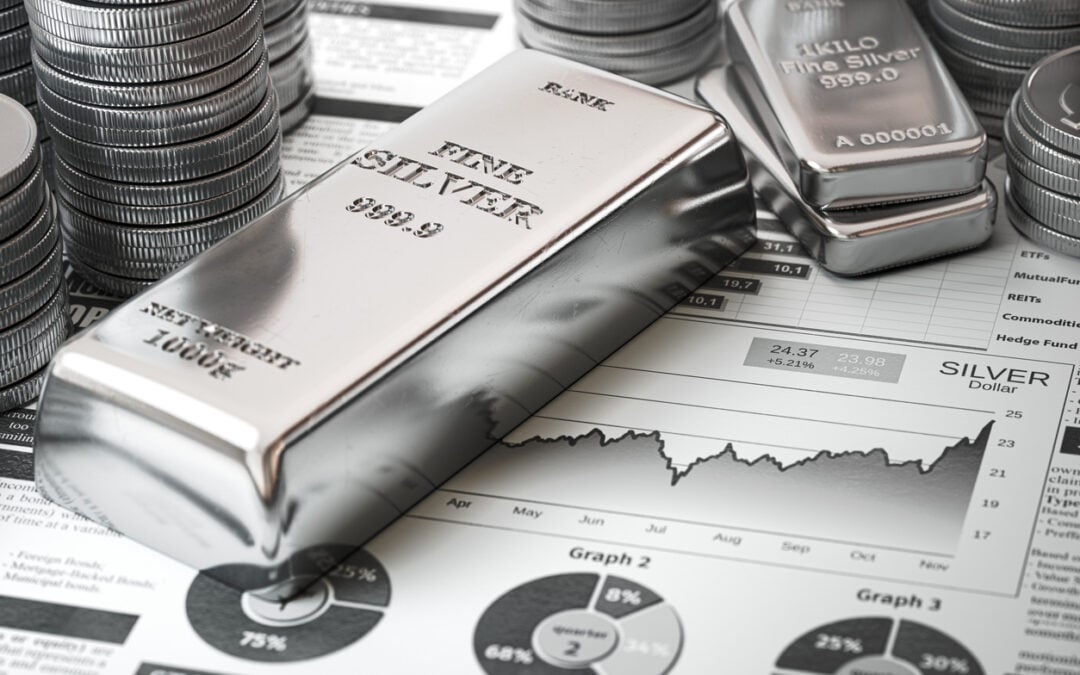
Buying your first piece of silver can be exciting. Maybe you started setting aside $5 a day, purchased your first silver round, or picked up a few silver coins because you wanted something tangible to show for your savings.
Now you’re wondering what comes next.
Do you buy more silver? Should you wait for prices to drop? Is it better to purchase coins or bars? And how do you know whether you’re getting a good deal?
At USA Pawn, we believe buying precious metals should start with understanding what you’re purchasing. You don’t need thousands of dollars to begin collecting silver, and you certainly don’t need to become a financial expert overnight.
But you should know a few things before spending your hard-earned money.
Whether you’re in Jackson, Pearl, Canton, or Vicksburg, Mississippi, learning to avoid these seven common mistakes can help you make more informed decisions as your silver collection grows.

Mistake #1: Buying Silver Without Understanding the Spot Price
One of the first things every silver buyer should learn is the meaning of spot price.
The silver spot price is the current market price for silver available for immediate delivery, typically quoted per troy ounce.
It’s an important number because it serves as a starting point for determining the value of physical silver.
However, there’s something new buyers often misunderstand.
The spot price isn’t necessarily the price you’ll pay when purchasing a silver coin, round, or bar.
Physical silver products usually include a premium above spot. This premium helps account for manufacturing, distribution, dealer expenses, and market demand.
For example, if silver were trading at a hypothetical $40 per ounce, you might find a one-ounce silver round selling for $44 or $46.
That difference doesn’t automatically mean you’re getting a bad deal.
The key is understanding what you’re paying for.
Different products carry different premiums. Government-issued coins may cost more than privately minted rounds. Collectible coins may have additional value based on rarity or condition.
Before purchasing silver, ask about the current spot price and how the product’s selling price compares.
A little knowledge can help you shop with greater confidence.

Mistake #2: Thinking Every Silver Coin Is Worth the Same Amount
A silver coin is a silver coin, right?
Not exactly.
Some coins are valued primarily for their silver content, while others may have additional collectible value.
For example, many U.S. dimes, quarters, and half dollars minted in 1964 or earlier contain 90% silver.
American Silver Eagles, on the other hand, contain one troy ounce of .999 fine silver and are popular among bullion buyers.
Then there are collectible coins that may be worth considerably more than their metal content because of rarity, condition, or collector demand.
This is where new buyers can get confused.
Just because a coin looks old doesn’t mean it’s rare. And just because a coin contains silver doesn’t mean it’s worth a fortune.
Before purchasing a coin, learn about its silver content, weight, condition, and potential collectible value.
It’s also important to avoid cleaning older coins. Polishing or scrubbing can damage their surfaces and reduce their appeal to collectors.
At USA Pawn, we encourage customers to ask questions about silver coins and understand what makes one piece different from another.
The more you learn, the easier it becomes to recognize value.
Mistake #3: Spending Too Much Money Too Quickly
When people discover something new and exciting, it’s tempting to jump in with both feet.
Silver collecting is no exception.
Maybe you see a headline about precious metal prices rising. Perhaps someone online predicts that silver will become dramatically more expensive.
Suddenly, buying as much silver as possible feels urgent.
But making financial decisions based on excitement or fear can lead to regret.
Silver prices fluctuate. They can rise, fall, and remain relatively unchanged for extended periods.
There is no guarantee that silver purchased today will be worth more next month or next year.
That’s why starting small can make sense.
In our earlier blog, we discussed the idea of setting aside $5 a day toward a silver purchase.
Five dollars a day adds up to approximately $150 in 30 days or $1,825 over a year.
That doesn’t mean you need to buy silver every time you save a few dollars.
Instead, you can build a savings habit, learn about the market, and make purchases when they fit your financial situation.
Avoid using money needed for rent, groceries, emergency savings, or other essential expenses.
Silver can be part of a broader financial strategy, but it shouldn’t replace responsible budgeting.

Mistake #4: Ignoring the Difference Between Silver Coins, Rounds, and Bars
If you’ve already purchased your first piece of silver, you’ve probably noticed there are several different ways to own it.
Silver coins, rounds, and bars can all contain investment-grade silver, but they aren’t identical.
Government-issued silver coins have an official face value and may appeal to collectors as well as precious metal buyers.
Silver rounds are generally produced by private mints and are valued primarily for their metal content.
Silver bars are available in different sizes and can be a practical choice for people who want to accumulate larger quantities of silver.
Each option has advantages.
Coins may offer recognizable designs and broad buyer interest. Rounds can be appealing to people looking for straightforward silver bullion. Bars may offer lower premiums per ounce in certain sizes or market conditions.
But larger isn’t always better.
A large silver bar may be less convenient to sell in smaller portions than several one-ounce pieces.
For example, someone who owns ten individual one-ounce rounds may be able to sell only a few when they need cash.
Someone who owns one ten-ounce bar may have fewer options for dividing that sale.
Think about your long-term goals before choosing which type of silver to purchase.
Are you collecting for enjoyment? Building a tangible savings reserve? Interested in historical coins?
Your answer can help guide your decisions.
Mistake #5: Forgetting About Storage and Security
Buying physical silver means you have something real to hold.
That’s part of its appeal.
But physical ownership also comes with responsibility.
Unlike money in a bank account, silver coins and bars need to be stored securely.
New buyers sometimes leave purchases loose in drawers, containers, or other places where they can become damaged, misplaced, or stolen.
A better approach is to create a storage plan before your collection becomes substantial.
Consider protective coin holders, tubes, or other suitable containers that help prevent unnecessary handling and surface damage.
Store your collection in a secure location, and avoid exposing silver to conditions that could cause unnecessary tarnishing or deterioration.
It’s also wise to maintain a simple inventory.
Record the type of silver you purchased, the weight, the amount paid, and the date of purchase.
Keep receipts when possible.
These records can be useful if you eventually decide to sell, insure, or pass your collection along to family members.
And remember that silver is heavy. A collection that begins with a few coins can eventually require more storage space than you anticipated.
A little organization now can save headaches later.
Mistake #6: Not Understanding How Selling Silver Works
Most people spend plenty of time thinking about how to buy silver.
Far fewer consider how they might eventually sell it.
But understanding the resale process is an important part of being an informed buyer.
When you purchase physical silver, you generally pay the dealer’s selling price.
When you sell, a buyer makes an offer based on factors such as silver content, current market conditions, product type, condition, and resale demand.
The amount offered may be below the current spot price, depending on the item and market.
This difference between buying and selling prices is sometimes called the spread.
It matters because silver prices may need to increase before you can recover your original purchase cost.
For example, if you purchase a silver round at a premium above spot, selling it immediately may result in receiving less than you paid.
That’s one reason physical silver is often better approached with a longer-term perspective rather than as a way to make quick profits.
At USA Pawn, we buy qualifying silver coins, bullion, jewelry, and other precious metal items.
Customers can bring in their silver and have it evaluated based on the item’s characteristics and current market conditions.
Whether you’re selling part of a collection or simply curious about its value, understanding the process helps you make more informed choices.

Mistake #7: Buying Silver Without Having a Goal
Why are you buying silver?
It sounds like a simple question, but it’s one worth answering.
Some people purchase silver because they enjoy collecting coins.
Others like owning a tangible asset that isn’t tied directly to a bank account.
Some buyers want to diversify their savings, while others enjoy learning about precious metals and their history.
There isn’t one universal reason to collect silver.
But having a goal helps you decide what to buy, how much to spend, and when to stop.
If you’re interested in collecting, you might focus on coins with designs or historical significance.
If your goal is to accumulate silver by weight, you may prefer bullion rounds or bars with competitive premiums.
If you’re building a long-term collection, consistency and careful recordkeeping may matter more than trying to predict every market movement.
Whatever your reason, avoid purchasing silver simply because someone on social media says you should.
Make decisions based on your own budget, interests, and financial priorities.
Why Buying Silver Locally Can Be a Smart Choice
With so many online sellers advertising precious metals, you might wonder why you should visit a local pawn shop.
One advantage is the opportunity to examine available merchandise in person.
You can look at a coin, ask about its weight and purity, and understand the price before purchasing.
You also have the chance to ask questions without relying entirely on online descriptions.
At USA Pawn, our inventory changes as customers buy, sell, and pawn merchandise.
That means available silver coins, rounds, bars, and jewelry may vary from one visit to the next.
You might discover an interesting coin, find a silver round that fits your budget, or learn something new about precious metals.
Shopping locally also gives you an opportunity to develop a relationship with a business that understands the community.
USA Pawn has served Mississippi customers since 1991, with six locations throughout Jackson, Pearl, Canton, and Vicksburg.
Whether you’re purchasing your first silver coin or adding to an existing collection, we’re here to help you explore your options.
What About Gold? Should You Collect Both?
As your interest in silver grows, you may begin wondering about gold.
Gold and silver are both precious metals, but they have different characteristics.
Gold generally has a higher value per ounce, making it possible to hold significant metal value in a relatively small amount of space.
Silver is typically more affordable per ounce, which can make it more accessible to people starting with smaller budgets.
Silver also has substantial industrial demand, while gold is widely used in jewelry, investment products, and central bank reserves.
Both metals experience price fluctuations.
Some collectors prefer one metal, while others choose to own both.
There is no requirement to diversify into gold simply because you’ve started buying silver.
Instead, learn about each metal and consider whether additional purchases fit your goals.
USA Pawn buys and sells qualifying gold and silver items, giving customers opportunities to explore both markets.
Start Small, Stay Curious, and Keep Learning
Building a silver collection doesn’t have to be complicated.
You don’t need to buy every coin you see, predict the next big price movement, or spend more than your budget allows.
What matters is understanding what you’re purchasing and making decisions that work for you.
Learn about spot prices. Compare premiums. Understand the difference between bullion and collectible coins. Keep records of your purchases, and remember that precious metal prices can move in either direction.
Most importantly, enjoy the process.
There’s something satisfying about holding a piece of silver in your hand and knowing exactly what you own.
Whether your collection consists of one silver round or dozens of coins accumulated over several years, every purchase can be an opportunity to learn.

Visit USA Pawn in Mississippi and Explore the World of Silver
Ready to take the next step in building your silver collection?
Visit USA Pawn and see what precious metals are available.
With six convenient Mississippi locations in Jackson, Pearl, Canton, and Vicksburg, our team can help you explore available silver coins, rounds, bars, gold, and other qualifying merchandise.
Already have silver you’d like to sell? Bring it in and ask about its value.
Interested in starting a collection? Stop by, browse our changing inventory, and learn about your options.
You can also visit www.usapawn.com to learn more about our services, find a location, or explore available merchandise online.
At USA Pawn, you don’t have to be an expert to get started. You just have to be willing to learn.
Start small. Buy wisely. And let your silver collection grow at a pace that makes sense for you.